How to Cook Salmon: Oven, Pan and Broiler
Cooking Salmon
Salmon is a fatty, pink to orange finfish that cooks fast, and the surest way to cook salmon is to bake it in a 400 degree Fahrenheit (200 degree Celsius) conventional oven for 12 to 15 minutes until the flesh flakes when you press it. That single method handles the 6 most common shapes at once, from a whole fillet to a skin-on portion, and it needs only 3 ingredients: the fish, salt and a little oil. The rest of this page is the detail that turns that base recipe into a good plate, including the pan and broiler variants, the cedar plank route, and the side dishes that ride along in the same oven.
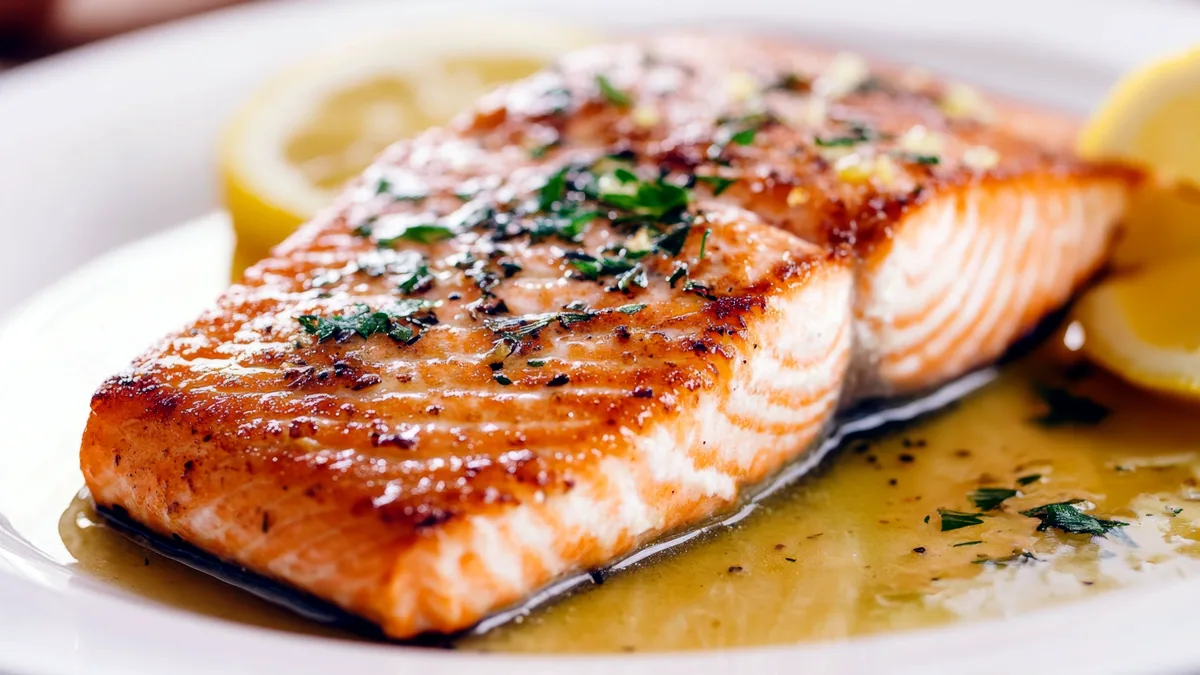
Before you set the heat, decide what the fish is. The two species most people buy at the counter are Atlantic salmon, farmed and firm with a bright orange color, and Pacific salmon, wild caught in 5 types such as king, coho, sockeye, pink and chum, each with a different fat level and color. The cut matters just as much, and the full map of species, cuts and preparation choices is covered on the Cooking Species, Cuts and Preparation guide, which is where you go when you are unsure whether a portion is a fillet, a loin, or a whole side.
Oven Method: Temperature, Time and the Flake Test
To cook salmon in the oven, preheat to 400 degrees Fahrenheit (200 degrees Celsius), line a sheet pan with foil or parchment, and roast for 12 to 15 minutes. The flake test is the only read you need: press the thickest part with a fork and the flesh should separate into flakes while still showing a thin raw line in the center, because the residual heat carries it through. Below is the time table for the shapes you are likely to have on the counter.
| Cut | Thickness | Oven time at 400 degrees F | Internal read |
|---|---|---|---|
| Skin-on fillet | 1 inch (2.5 cm) | 12 to 15 minutes | 145 degrees F (63 degrees C) at the thickest point |
| Diced chunks | 1 inch cubes | 10 to 12 minutes | Even flakes, no glassy center |
| Whole side | 1.5 inch (4 cm) | 18 to 20 minutes | Flakes cleanly at the bone |
Season with salt and a neutral oil, or a compound of butter, garlic and herbs for a richer crust, and let the fish rest for 3 minutes off the heat so the juices settle. If you like a crispier top, switch on the broiler for the final 1 minute, but keep the door ajar, because a thin fillet can go from done to dry in under 60 seconds.
Pan and Broiler: Faster, Shallower, Closer to the Heat
To cook salmon in a pan or under a broiler, you trade the even oven heat for a faster sear and a shallower cook. A stainless or nonstick pan over medium high heat, with the skin laid down first, gives a crisp skin in 4 minutes and a finished fillet in 6 minutes total, and a broiler at its high setting finishes a thin portion in 4 to 5 minutes. The risk in both is the same: the outside hits the target before the center does. For a thick loin, start it in the oven at 400 degrees and finish it in the pan for the last 90 seconds, so you get a warm center and a crust. The broiler works best on a rack set 4 inches (10 cm) below the element, and you check it every 30 seconds once it passes the halfway point.
Why Cook Salmon on a Cedar Plank
To cook salmon on a cedar plank, you are buying two things that a metal pan cannot give it: a gentle steam that keeps the flesh moist, and a light wood smoke that changes the flavor without a fire. Soak the plank in water for 1 hour, lay the fillet on it with the skin facing the wood, and bake at 400 degrees Fahrenheit for 13 to 15 minutes, which is roughly 1 minute longer than the bare pan method because the plank conducts heat more slowly. The wood acts as a barrier, so the flesh steams in its own fat, and the cedar oils released at that temperature add the aroma people describe as smoky even though no open flame is involved. A plank cook is also a hands off method, which makes it the default when the oven is already carrying 2 other dishes.
Sides and Mains That Share the Same Oven
To use one oven for a full table, you time the salmon against dishes that bake at the same 400 degrees Fahrenheit without fighting it for space. The potato is the anchor here: a 12 to 15 ounce russet, washed and pricked with a fork, bakes in 50 to 60 minutes, so it goes in first and the salmon goes in for its final 15 minutes on a second rack. The greens follow the same logic, and the asparagus in particular is the easiest companion, since the Cooking Asparagus guide lays out the roast time for a 12 inch spear at exactly the temperature the salmon is using. The rice is the only element that runs on its own clock, and the stovetop and rice cooker timing in the Rice: Stovetop and Rice Cooker guide is what you start while the oven is preheating, so it is ready by the time the fish comes out.
The heavier mains do not compete with the salmon and they share the rack without issue. A batch of burgers or hamburgers, about 4 to 6 at 4 ounces (113 grams) each, bakes in 18 to 22 minutes at 400 degrees, and a pair of drumsticks bakes in 40 to 45 minutes, so both go in early and finish near the same moment the fish does. The ribs are the one that needs its own slot, since a rack at 275 degrees for 3 to 4 hours is a low and slow cook that the 400 degree salmon session cannot share, so the ribs are planned as their own evening rather than a same tray side. The hot dogs are the odd one out, and they are a pan or grill job, not an oven one, because a 400 degree oven dries them out before they brown.
From Field to Fork: Reading the Fish Before You Cook It
To cook salmon well, you start by reading it, because the catch and the cut set the clock before the oven ever does. The chain runs from water to plate in 5 steps, and each one changes how you handle the next: the species and catch decide the fat, the cut decides the thickness, the thickness decides the time, the time decides the doneness, and the doneness decides the rest. The From field to fork guide walks that whole chain for the wild fish, and it is the page to read when you are holding a portion you have not bought before and need to know whether it wants a 12 minute bake or a 20 minute one. For a farmed Atlantic fillet of 1 inch, you are on the short end of the table; for a wild king loin of 1.5 inches, you are on the long end, and the flake test is the same either way. That is the whole method, and once the fish flakes and rests, the plate is done.