How to Cook Asparagus: Oven, Boil and Grill
Cooking Asparagus
Asparagus is a spring vegetable that you cook by roasting, boiling or grilling it, with the single most reliable method being 12 to 16 minutes under a 220 C (425 F) oven where the spears crisp at the tips and the stems stay firm. The three methods on this page are the oven, the pot of water and the grill, each of which produces a different texture: the oven concentrates the flavour, boiling keeps the spear pale and tender, and the grill adds a char. The best result depends on the thickness of the spear, and most market asparagus is a 15 to 20 mm (0.6 to 0.8 inch) thick middle grade that suits all three. Before you choose a method, it helps to understand where asparagus sits on this site: as a tender spring stem, it is treated like a delicate cut rather than a tough roast, and the same rules of trimming, salting and a short, hot cook that guide the meat apply here. For the wider framework of how a raw product becomes a plated dish, see our Cooking Species, Cuts and Preparation section, which sets out the cuts, the temperatures and the timing that this page puts to work on a single vegetable.
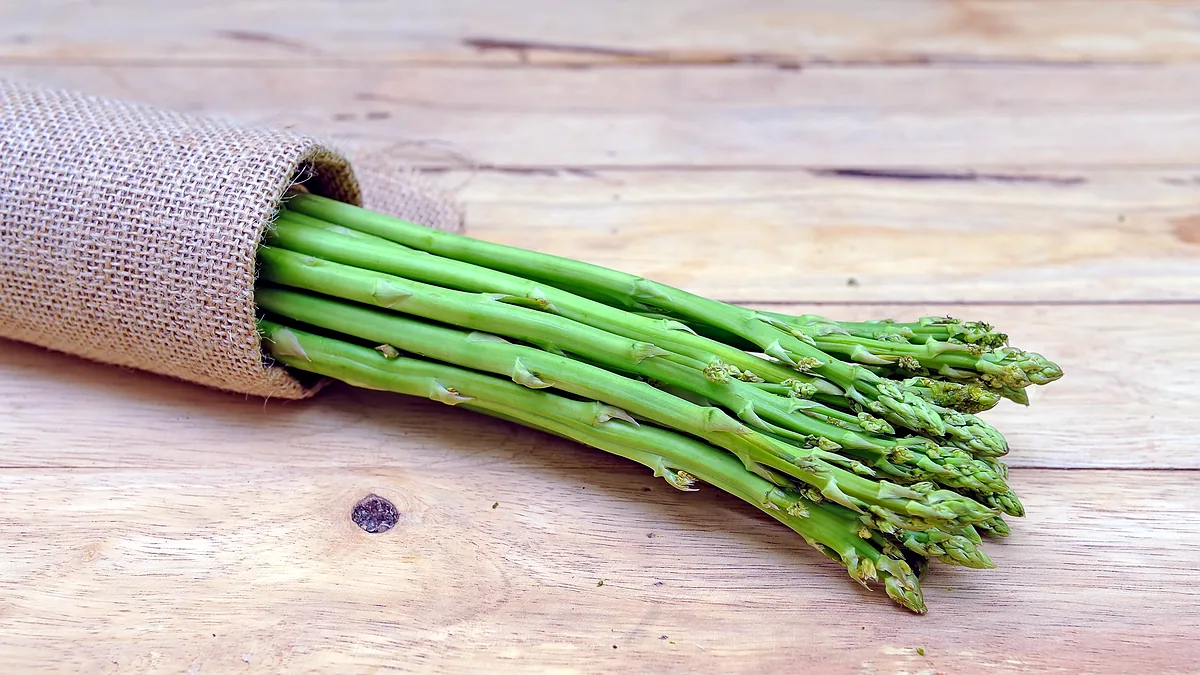
How to cook asparagus
To cook asparagus, trim, salt and heat it for a short time, and the oven is the one method that suits a whole batch at once. The full sequence is the same for every method on this page, and it takes 5 steps: snap off the woody ends, rinse and dry the spears, salt them, choose a heat source, and cook for the time that matches their thickness. A 15 to 20 mm spear takes 12 to 16 minutes in the oven, 4 to 6 minutes in boiling water and 3 to 5 minutes on the grill. If you want a single default that never fails, use the oven: 220 C (425 F), 12 to 16 minutes, finished with a little butter and a crack of black pepper. The rest of this page is that one method in detail, with the pot and the grill as the two alternatives.
Cook asparagus in the oven
To cook asparagus in the oven, you need a single sheet tray, a hot oven and nothing more than oil, salt and a timer. The oven is the method I reach for first, because it holds 12 to 15 spears in one go and it lets the spears brown instead of steam. Line a sheet tray with a little oil or a thin smear of butter, lay the spears in one layer, and heat at 220 C (425 F) for 12 to 16 minutes, turning once at the halfway point. Thin spears of under 12 mm (0.5 inch) are done in 9 to 11 minutes, while thick spears over 20 mm (0.8 inch) need the full 16 minutes and sometimes 18. The spears are ready when a knife slides through the stem with no resistance and the tips turn a deeper green. For the best oven finish, add 15 g (about 1 tablespoon) of butter and 5 g (1 teaspoon) of sea salt across the spears during the last 3 minutes, so the butter melts onto the spears rather than scorching on the tray.
Preparation that makes the oven work
To prepare asparagus for the oven, snap the woody ends rather than cutting them, because the spear always breaks at the exact point where the tender stem meets the fibrous base. Hold each spear with both hands, bend it gently, and it snaps clean; on a 25 to 30 cm (10 to 12 inch) spear the waste is usually 5 to 8 cm (2 to 3 inches). Rinse the spears and dry them well, because a wet spear will steam on the tray instead of brown. Lay them in a single layer with the tips all facing one direction so they heat evenly, and leave a small gap between spears so the hot air moves around each one.
Boiling asparagus
To boil asparagus, use a tall pot of salted water and a short, exact time, because boiling is fast and it is the one method where timing is the whole job. Fill a tall pot with enough water to stand the spears upright, and add 10 g (2 teaspoons) of salt per litre (about 0.5 teaspoon per quart) so the water tastes faintly of the sea. Bring it to a rolling boil, set the spears in with the tips down, and cook for 4 to 6 minutes depending on thickness: 3 to 4 minutes for a thin spear and up to 6 minutes for a thick one. The test is the same as the oven: the knife must pass through the stem without force, and the spear should bend without snapping. Pull the pot off the heat and run the spears under cold water for 30 seconds to stop the cook, because a boiled spear keeps cooking in its own heat. The best finish for a boiled spear is a warm knob of butter and a few drops of lemon, added while the spears are still hot so the butter melts into them.
Grilling asparagus
To grill asparagus, use a hot grate and a fast cook, because the grill gives the same char as the oven in half the time and with far less cleanup. Set the grate to high heat and let it come to full temperature, which takes about 5 minutes on a gas grill and 8 to 10 minutes on charcoal. Brush the spears with oil, lay them perpendicular to the bars so the thin tips do not fall through, and cook for 3 to 5 minutes per side for a 15 to 20 mm spear. Thin spears need only 2 to 3 minutes per side, while thick ones may take 5 to 6 minutes on the first side before the second. The grill marks should be dark and the stem should still snap with a little bite when you pull it off. If a tip begins to blacken while the stem is still raw, move the whole batch to the cooler edge of the grate for the final minute.
Timing and thickness
To match the time to the spear, measure the thickness at the middle of the stem and adjust the clock, because a 5 mm difference in diameter is the difference between a tender spear and a raw one. The table below covers the three methods at the three common sizes. All times assume the heat is already at temperature and the spears are dry and oiled.
| Thickness | Oven at 220 C (425 F) | Boiling | Grilling, per side |
|---|---|---|---|
| Thin, under 12 mm (0.5 inch) | 9 to 11 min | 3 to 4 min | 2 to 3 min |
| Medium, 15 to 20 mm (0.6 to 0.8 inch) | 12 to 16 min | 4 to 6 min | 3 to 5 min |
| Thick, over 20 mm (0.8 inch) | 16 to 18 min | 6 to 7 min | 5 to 6 min |
Finishing and serving
To finish asparagus, add the seasoning at the end, because butter, salt and acid work better on a hot spear than on a cold one. The classic finish is 15 g (1 tablespoon) of butter, 5 g (1 teaspoon) of flaky salt and a squeeze of lemon, all added the moment the spears leave the heat. A small handful of toasted seeds or a dusting of grated cheese works on the oven and grill versions, where there is a dry surface for it to grip. As a side, a boiled spear pairs with a grain that soaks up the butter, so it is worth keeping a stovetop method ready, whether that is a Rice: Stovetop and Rice Cooker or a quick Quinoa Fluffy and Light to serve on the same plate. The same short, hot, salted approach that turns a raw spring stem into a plated dish is the whole logic of the From field to fork path that this site follows, and the oven method above is where it lands for asparagus.