The Game Larder Recipe Book: Wild Game Cookery
A recipe book for wild game
A recipe book is a bound, indexed and numbered collection of tested recipes that lets you cook the same dish from any page in under 5 minutes, and the game larder edition applies that format to wild game. The book gathers the year-round cuts of red deer, roe deer and pheasant into 36 tested recipes, each with a weight, a temperature and a time, so a 2 kg shoulder of venison is not guessed at but pulled from a card. It sits beside the live pages on this site as the printed and personalised home for the method, and it is the anchor for the Recipe Book section. The next paragraph covers how the book is held in the kitchen, where the best game titles are listed, and the catering work built on wild game.
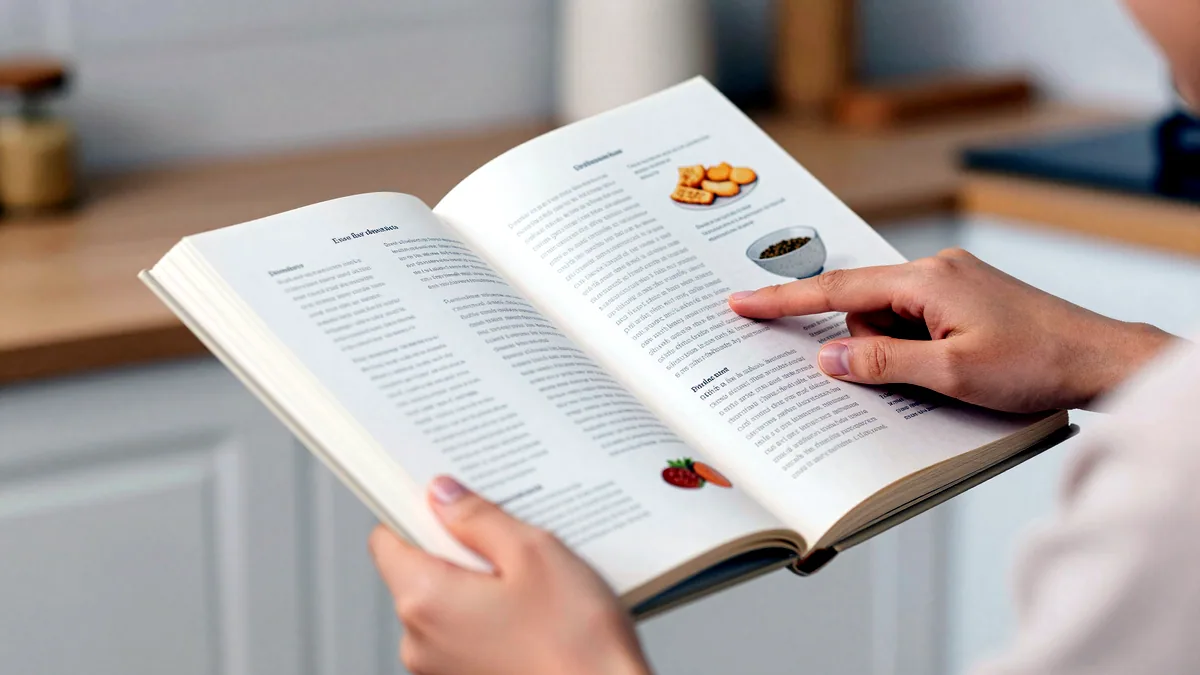
The book is written to be stood open on a worktop or a rail, which is where Recipe Book Stands and Holders for the Kitchen earns its place. A rail mount holds the cover flat over the sink while you wash; a weighted stand with a 20 degree tilt keeps the page level over a 14 inch pan; and a two-ring binder lets you file loose recipe cards by season. The format you choose decides where the book lives, and where it lives decides whether you reach for it or for a phone.
What a game recipe book is
A game recipe book is a reference built for a small, seasonal range of cuts rather than a large, constant one. A beef book can list 80 cuts that are in season all year; a game book lists about 20 cuts, 12 of which are in season between September and March. The book is therefore thinner but denser, because each entry carries the game-specific data that a generic book omits: the bone-in weight, the venison seasoning, the point at which a 24 hour dry-age turns a shoulder from 42 to 45 percent of its raw weight in water held. The entries are grouped by cut first and by season second, because you choose a cut from the carcass you have on the counter, and the season only tells you which cuts are on the counter.
The same book is what a household, a shop and a kitchen all use, and the scale of each reader is the same: one page, one dish, one set of numbers. That is why a 36 recipe book feels complete rather than skimpy, and why a 500 page omnibus feels empty on game.
How to write a game recipe book
To write a game recipe book, you test each dish at least 3 times before it is allowed onto a page, and you record only the numbers that survived all 3 runs. The template that does this has 11 fields, and a recipe that leaves one blank is not a recipe yet, it is a note. The 11 fields are the cut, the weight, the preparation, the seasoning, the heat, the time, the internal temperature, the rest, the yield and the pairing. The first 2 runs find the method, and the 3rd run checks that the method is reproducible by someone who has never done it, which is the only test that matters in a kitchen. A homemade book follows the same 11 fields on index cards, and a professional book follows them on a 6 by 9 inch page, and the difference is binding, not method. The writer who skips the 3rd run publishes a book that works once and fails the first time a guest asks for the shoulder again.
Choosing a book for your own recipes
To keep your own recipes, you buy a book with a blank or ruled page in the back and write each dish in as you test it. A 200 page book gives you about 100 recipe pages, and a 300 page book gives you 150, so size the book to the number of dishes you actually cook rather than the number you dream of. The blank book is the template for a personalised book, because the owner fills it and the owner's hand is the design. A printable set of recipe cards does the same job on a 4 by 6 inch card that goes into a folder or a 2-inch binder, and a digital book does it on a screen that is 12 inches wide and 8 inches tall. The 11 field template from the writing section is what keeps a blank book from becoming a junk drawer; write the field in pencil first and ink it when it survives its 3rd test, and the book grows only with working dishes. A journal format adds a date line under each recipe, and the date is the honest record of when the dish last worked in your own kitchen.
Reading the entries: cuts and temperatures
To read the entries, you look for the 3 numbers that decide the cook: the weight, the internal temperature and the time. The table below holds them for the cuts the book opens with, and the same 3 columns appear on every card in the book, so a reader who learns to read one card can read all 36. The temperature is the number you trust, the time is the number that changes with the oven, and the weight is the number that changes with the season and the hunter, so a 1.8 kg shoulder is not the same as a 2.2 kg one and the time moves with it.
| Cut | Typical weight | Internal temperature | Method time | Season |
|---|---|---|---|---|
| Venison shoulder | 2 kg (4.4 lb) | 63 C (145 F) | 4 hours | September to March |
| Roe deer saddle | 0.9 kg (2 lb) | 54 C (130 F) | 25 minutes | August to February |
| Pheasant breast | 0.35 kg (0.78 lb) | 60 C (140 F) | 18 minutes | October to January |
| Red deer haunch | 3 kg (6.6 lb) | 65 C (149 F) | 3 hours | September to February |
| Bird breast | 0.15 kg (0.33 lb) | 63 C (145 F) | 12 minutes | September to January |
The 63 C for a venison shoulder is the medium point where the meat still holds its shape and the fat has just started to render, and the 54 C for a roe saddle is the rare point that works because the saddle is thin and even. The weight is the number you adjust, the temperature is the number you keep, and the time is the number you forgive.
Holding the book in the kitchen
To hold the book in the kitchen, you match the stand to the place where the cook stands. A 45 cm wide stand suits a worktop; a wall rail suits a 60 cm wide kitchen; and a two-ring binder suits a drawer. The stand is not a decoration, it is the reason the page stays open while both hands are on the pan. The 20 degree tilt on a weighted stand keeps a 14 inch page flat, and a rail mount keeps the book 10 cm from a 90 C pan, which is the distance that keeps the cover from warping in a season of use. The holder you buy in one size and the one you buy in three, and the one you keep is the one that matches the counter, not the one that matched the shop window.
Cooking at the scale of the larder
To cook at the scale of the larder, you use the same 11 field cards on a sheet of paper and a 30 kg tray, because the card that works for 4 works for 40 if you scale the weight and hold the temperature. A 2 kg shoulder feeds 4; a 10 kg batch of the same recipe feeds 20, and the internal temperature does not move, which is the whole point of writing it down. Catering built on wild game is this exact method at 10 times the scale, and it is why the book is a reference for a kitchen, a shop and a larder, and not only for a home. The numbers on the card are what a 30 kg batch and a 4 person table both read, and the numbers are what keep the two at the same temperature.
The next step is to open the book at the cut you hold and read the 3 numbers, and to keep the book open on the stand until the dish is on the plate.