Cuts: A Field Guide to Game Cuts from The Game Larder
Cuts
Cuts are the named pieces of a carcass that a butcher separates by following the muscles, fascia and bones of a whole animal, and a wild game larder works with 20 or more of them across venison, deer and beef alone. Every cut carries its own muscle, its own grain and its own fat line, which is why the same animal yields a 450 gram rump loin and a 2 kg saddle from different ends of the spine. This is the full family of game cuts, from the field to the pan, so you can orient before choosing a single one.
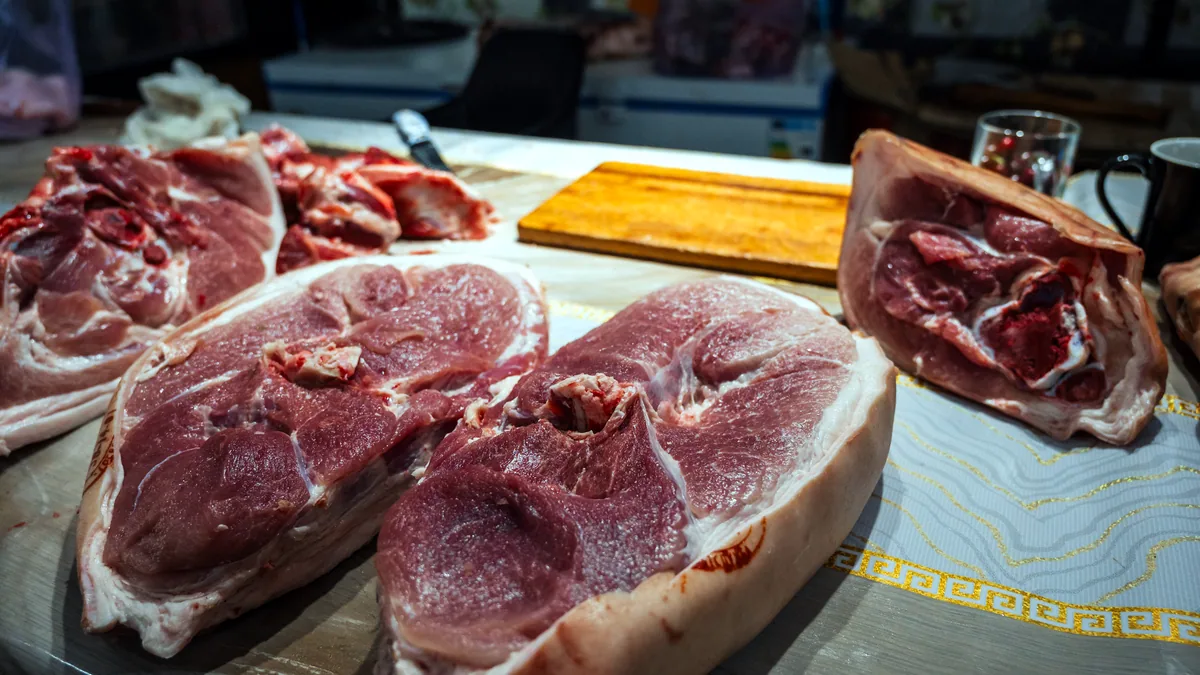
The family splits by the part of the animal it comes from. Forequarter cuts such as shoulder, brisket and shank are worked muscles, so they cook slowly. Hindquarter cuts such as rump, loin and leg are rested muscles, so they cook fast and lean. A porterhouse sits at the boundary, because it is a loin bone-in slice that carries 2 different muscles at once, the tender loin on one side of the bone and the tougher strip on the other, and that single piece is the clearest example of why a cut name is a promise about both texture and technique. When you plan a menu, you plan by cut, not by animal, and the Beef Cuts chart and the Best Cuts of Beef for Steaks guide are the two maps that keep that planning honest from field to fork.
What a Cut Actually Is
A cut is a repeatable way to separate one muscle or muscle group from a carcass so that it cooks as a unit. The rule is simple, because the muscle dictates the method. A muscle that worked hard all day, like the shoulder, is dense with connective tissue and needs 3 hours of braise to turn that collagen into gel. A muscle that rested, like the loin, has little connective tissue and needs 4 minutes a side at high heat. When a butcher says a piece is a cut, they mean you can buy it again tomorrow and get the same shape and the same cooking behaviour, which is what makes a cut a unit of planning rather than just a name for a chunk of meat. That repeatable shape is also why the word is used in other trades. A barbershop cut in Limavady or a haircut cut in Farnborough uses the same idea of a clean line through a material, and a crossword puzzle gives the same idea back to you as a synonym when it asks for the answer to "cut through" in 4 letters. The meat trade keeps the original meaning, but the family of meanings all point at one act, which is to separate a piece by a defined line.
The Family of Game Cuts, by Part
The game larder organises its cuts by the four parts of the carcass, and each part gives a different cooking job. The table below lays the family out by part, by named cut and by the method that cut asks for, so you can see the whole system before you pick one.
| Part of the animal | Named cuts | Method that cut asks for |
|---|---|---|
| Forequarter, shoulder and neck | Shoulder, neck, fore shank, brisket | Braise, stew or slow roast for 3 to 5 hours |
| Midsection, loin and belly | Rump loin, loin, saddle, belly, flank | Roast, grill or pan sear, 4 minutes a side |
| Hindquarter, rump and leg | Rump, leg, top and bottom sirloin | Sear and rest, or braise the shank end |
| Bone-in special cases | Porterhouse, bone-in saddle, chump | Roast or grill with the bone, 18 to 22 minutes at 220 C |
Notice the pattern. The forequarter gives you the slow food, the midsection gives you the fast food, and the hindquarter splits between the two. That split is the whole logic of the larder, and it is the logic you use when you buy, because you buy for a method first and for a flavour second. When the menu wants a quick weeknight piece, you reach for the midsection. When the menu wants a Sunday braise, you reach for the forequarter, and the shoulder is the cut that earns its name as the game equivalent of a braising roast.
The Porterhouse and the Bone-In Cuts
A porterhouse is the cut that teaches you the most, because it is two muscles on one bone and it shows you why bone matters. The bone runs down the middle, the tender loin sits on one side, and the strip sits on the other, so a single 450 gram piece gives you 2 textures and 3 ways to eat it. A bone-in saddle, the whole venison back as one piece, works the same way, because the bone keeps the meat moist over a 22 minute roast at 220 C. A chump, the neck end of the venison shoulder, is the slow version, and it braises for 4 hours until the grain pulls apart. The common thread is that a bone-in cut buys you flavour and juiciness at the cost of a little extra time, and that trade is the reason a bone-in porterhouse costs more per pound than a boneless loin, even though the meat on the bone is the same muscle you could buy as a loin steak.
Cuts Versus Bulk, Where the Line Falls
Cuts and bulk are not the same thing, and the difference decides whether a piece cooks evenly or fights you. A bulk purchase is the whole saddle or the whole leg as one uncut mass, often 6 kg of venison that you must break down into cuts before you can cook it. A cut is the piece you actually cook, the 250 gram rump loin or the 450 gram porterhouse that came out of that mass. Bulk is a quantity, and a cut is a form, so when a recipe calls for "2 rump loins" it is asking for 2 cuts, not 2 kilograms of bulk. The practical rule is to buy bulk only if you are butchering yourself or you can store a whole piece for 2 to 3 weeks, because a cut is always the smaller, more controlled unit and it is the unit a recipe is written against. If you are new to game, buy cuts, not bulk, because a named cut tells you exactly what to do and a bulk piece tells you nothing until you have separated it by the lines described in the table above.
Choosing a Cut for the Cook You Are
The cut you choose should match the skill you have and the time you have, and the match is made by the muscle, not by the label. For a first cook with 30 minutes, choose a rested hindquarter cut such as a rump loin, because it is forgiving, it needs no basting and it is done in 4 minutes a side with a 5 minute rest. For a cook with 3 hours, choose a forequarter cut such as a shoulder, because the time is doing the work and the result is tender whatever the exact temperature. For a cook who wants one impressive piece, choose a bone-in cut such as a porterhouse or a bone-in saddle, because the bone carries the flavour and the 2 muscles make the plate look like it took longer than it did. The list below keeps the three tiers in one place, so you can pick a starting cut for any skill level in 10 seconds.
- Beginner, 30 minutes, rested hindquarter cut such as a rump loin
- Intermediate, 3 hours, forequarter cut such as a shoulder
- Confident cook, 1 to 2 hours, bone-in cut such as a porterhouse
- Butcher at home, a full weekend, bulk such as a whole saddle or leg
Keep the cut name and the method together in your head, because that pair is the whole system. A cut is a promise about the muscle, the muscle is a promise about the method, and the method is a promise about the time you must give it. When you can look at a piece of game and say what muscle it is and what it wants, you are past the label and inside the craft, which is the point of keeping a larder of cuts instead of a pile of bulk.