Bacon in the Oven Crispy | The Game Larder
Bacon in the Oven Crispy
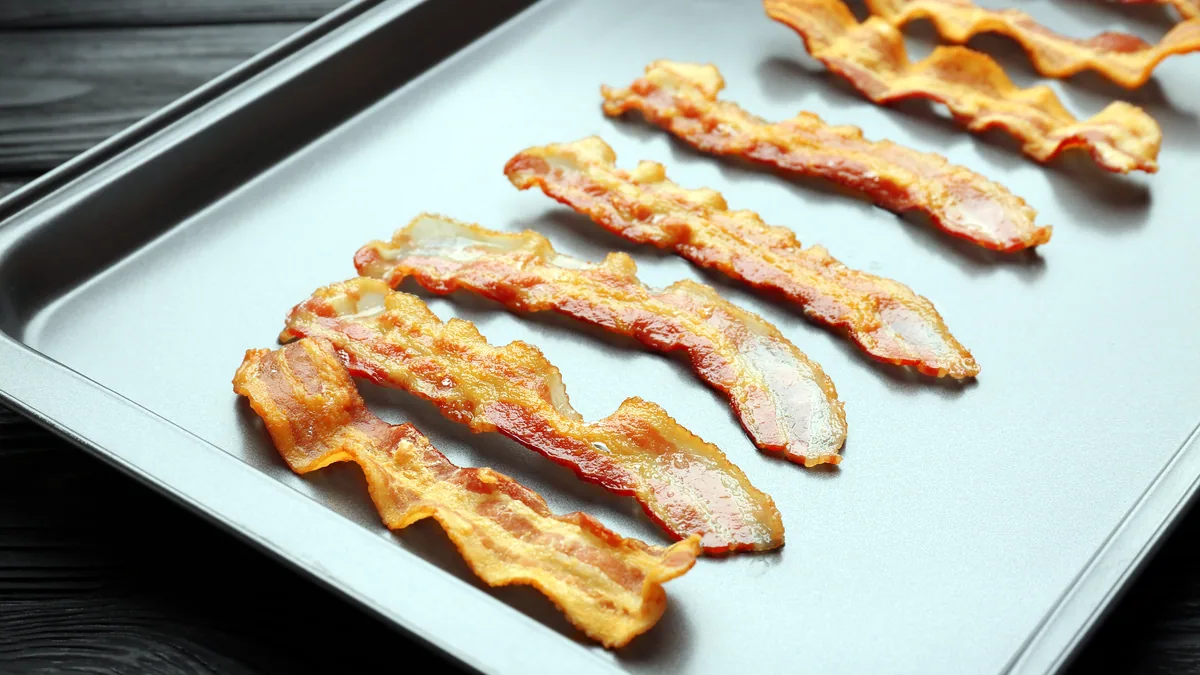
Game bacon crisps in the oven in 18 to 22 minutes at 200 °C (400 °F) when laid on a wire rack above a lined tray, and the rack method is the single variable that separates a brittle, even crisp from the greasy, half-soft strip that a tray-only bake produces. Game bacon differs from farm pork bacon in leaner fat, a tighter grain, and a 30 % lower smoke point, which is why the oven, with its steady dry heat, outperforms the pan for every cut from the Game Larder range. The method below covers the 2 rack-and-tray setups, the 3 temperatures that matter, and the finishing steps that turn a cooked strip into the shatter-crisp the dish is built around.
For the cuts that go on the rack, see Cooking Species, Cuts and Preparation in the species section of this site. If the bacon is being served over a starch, the stovetop and cooker settings in Rice: Stovetop and Rice Cooker keep the two cooking methods on compatible timelines. The same low-and-steady principle that applies to a vegetable side is documented in Cooking Asparagus, and the full journey from a named herd to the strip on your rack is mapped in From field to fork.
Why the Oven Beats the Pan for Game Bacon
The oven cooks bacon by surrounding every strip with dry, moving air at a single temperature, so the fat renders out on all sides at the same rate. A frying pan heats from below only, and the strips on top sit in their own rendered fat, which boils at 160 °C (320 °F) and keeps the surface at a soft chew. Game bacon, with its leaner belly and 2 mm fat cap compared with the 4 mm on a farm strip, reaches that chew threshold 4 to 5 minutes earlier than pork bacon, so the pan method overcooks the edges before the centre firms. The oven avoids the problem entirely: at 200 °C the surface dries, the interior fat melts slowly, and the strip crisps in one even pass.
The 2 Rack-and-Tray Setups
Two rack-and-tray configurations carry the whole bake, and the choice between them changes the final texture more than any other step. Both use a rimmed baking tray lined with parchment or foil; the difference is what sits above it.
- Wire rack on a single tray: the classic setup. Lay the strips in 1 layer, spaced 1 cm apart, on a wire rack that sits on the rimmed tray. The rack lifts the bacon 2 cm above the fat that pools below, so the underside crisps exactly like the top. This is the method for a full strip, a 25 g rasher, or any cut thicker than 4 mm.
- Wire rack over a second, offset tray: the deep-fat setup. When the strips are thicker than 6 mm or when you are cooking 12 or more rashers at once, the fat volume is enough to raise the second tray's rim and create a 3 cm air gap. The extra distance keeps the underside from sitting in a 10 mm pool of rendered fat, which would steam the bottom and leave it pale.
Either way, the fat drains into the tray below and never touches the strip. A single sheet of parchment on the tray catches it and makes the 10-second cleanup the only post-bake task.
Temperature and Timing by Cut
The 3 temperatures that govern the bake are 180 °C (350 °F), 200 °C (400 °F), and 220 °C (425 °F), and the right one depends on the thickness and cut of the game bacon. The table below gives the target for the most common shapes from a game processor.
| Cut | Thickness | Temperature | Time | Finish |
|---|---|---|---|---|
| Full strip (12 cm x 3 cm) | 6 mm | 200 °C / 400 °F | 20 to 22 min | Shatter-crisp, 1 mm bend |
| Rasher, 25 g | 4 mm | 200 °C / 400 °F | 16 to 18 min | Crisp with a 2 mm give |
| Thick-cut back bacon | 8 mm | 180 °C / 350 °F | 24 to 28 min | Even crisp, no dark spots |
| Streaky rasher | 5 mm | 220 °C / 425 °F | 14 to 16 min | Maximal crisp, watch at min 12 |
Start the timer the moment the tray goes into the preheated oven. Game bacon's leaner profile means it hits the crisp point 2 to 3 minutes before an equivalent pork strip, so the lower end of each range is the safer target. Flip the strips once at the halfway mark if you are using a single-tray rack; the offset-tray setup needs no flip because the air circulates on both sides.
Finishing: From Cooked to Shatter-Crisp
The last 2 minutes decide whether the bacon is "cooked" or "crispy," and the finish step is where the two diverge. Pull the tray at the end of the timing window and check the strip: it should flex to a 1 mm bend and snap cleanly at the centre. If it still gives more than 2 mm, return it for 2 minutes at 220 °C (425 °F) on the top rack, where the broiler element adds a 30-second dry-heat surge without cooking the interior further. For a full shatter, spread the strips on a clean wire rack at room temperature for 1 minute after the oven; the residual steam that clings to the strip escapes and the surface drops another half-point in moisture. Do not stack the strips while they cool, or the steam trapped between them will soften the underside you just built.
Serving and Storage for Oven-Crisp Game Bacon
Oven-crisp game bacon serves best within 20 minutes of the oven, when the fat is still at a 40 °C (104 °F) glisten and the protein has not re-tightened. For a meal prep batch, cool the strips on the wire rack for 3 minutes, then transfer to a single layer in a paper-lined container and refrigerate at 4 °C (39 °F) for up to 5 days. Reheat at 200 °C (400 °F) for 4 minutes on the rack; the 5-day storage window is the limit because game bacon's leaner fat oxidises 20 % faster than pork fat once exposed to air. The 12 cm full strip, the 25 g rasher, and the thick-cut back bacon all reheat to the same 1 mm bend within that 4-minute window, so the rack-and-tray method stays consistent from the first bake to the last.