Gammon Joint: Roast and Boil Methods | The Game Larder
Gammon Joint: Roast and Boil Methods
A gammon joint is a boneless or bone-in pork joint, cut from the front leg, that cooks by roasting or boiling in 45 minutes to 3 hours 15 minutes depending on weight and method. The central task is to cook gammon joint at a steady temperature, whether in a water bath on the stovetop or in an oven, while keeping the interior at a safe 71 C (160 F) without drying out the outer third. A 1.8 kg (4 lb) joint takes 1 hour 45 minutes to boil and roughly 1 hour 15 minutes to roast, and every 1.25 kg (3 lb) of extra weight adds 30 minutes. The method you choose shapes the texture: boiling keeps the gammon joint moist and lean for a sliced, cold plate, while roasting builds a caramelised rind and a firmer slice.
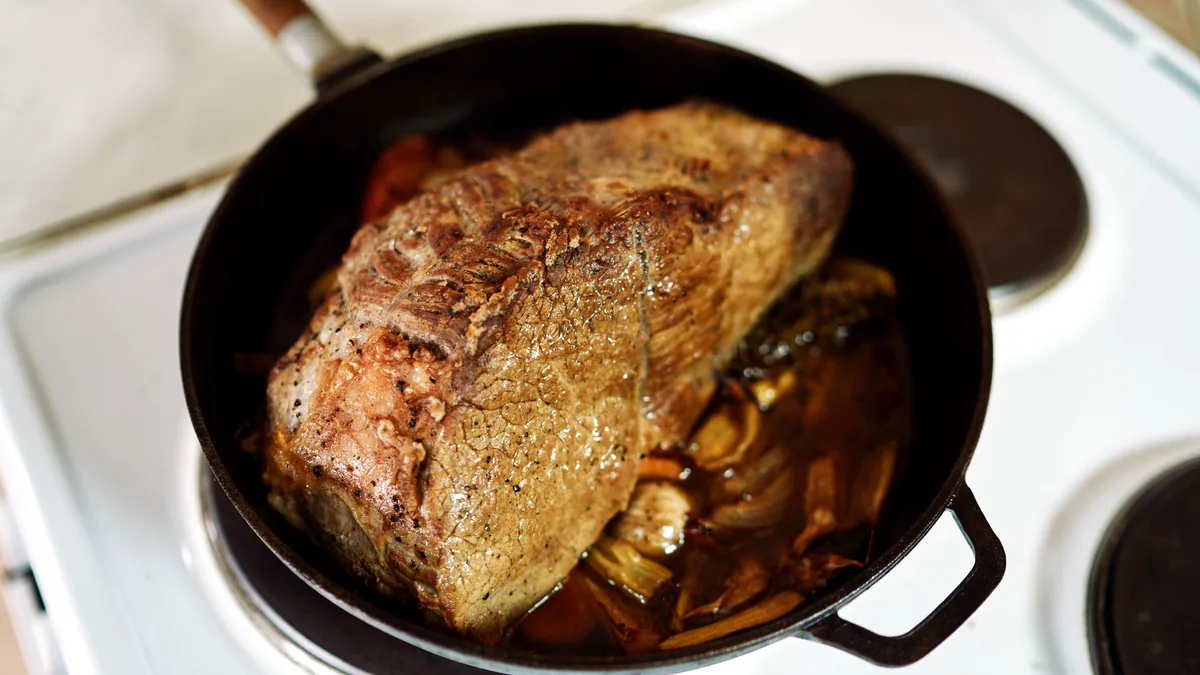
Before you start, check the pack for a cure level. Most supermarket gammon joints arrive cured or part-cured, so they cook in the plain times listed here. A fresh, uncured leg from a butcher needs a 48 hour brine before it behaves like the tinned-cure product on the shelf, and the salt concentration changes the boiling time by up to 20 minutes per side of the pack. Treat the cure as the variable that decides whether you cook gammon joint straight away or after a brine step. For the wider context of how a leg moves from animal to tray, the page on Cooking Species, Cuts and Preparation walks through the 8 main front-leg cuts and where a gammon sits inside them, and the related guide on Cooking Asparagus covers the 3 minutes to blanch a spring spear so it finishes at the same time as the joint. If you want a quick side that hits the table in the same 15 minutes the gammon joint rests, the rice page at Rice: Stovetop and Rice Cooker gives 2 stovetop methods and 1 rice-cooker cycle that stay under 20 minutes. The arc From field to fork explains how a 90 day finish on grass changes the fat colour in the rind you will be scoring today, so you know what you are looking at before the knife goes in.
Choosing the right gammon joint
Choosing the right gammon joint starts with the label and the bone. A bone-in gammon joint from a 10 to 12 kg (22 to 26 lb) front leg carries a central shin that acts as a heat sink, so it runs 15 minutes longer per 1.8 kg (4 lb) than a boneless cut from the same leg. The 4 standard sizes a UK supermarket stocks are 1.3 kg (3 lb), 1.8 kg (4 lb), 2.3 kg (5 lb) and 2.7 kg (6 lb), and the 1.8 kg (4 lb) joint is the one that fits a standard roasting pan with room for a 5 cm (2 inch) gap around it. Two finish types sit on the shelf side by side: a fully cured gammon joint, which is pink and ready to cook, and a part-cured joint, which is paler and needs the full boiling time or a 10 minute extension to roast. Weigh the joint before you start, because the pack weight includes the glaze, and a 1.8 kg (4 lb) pack with a 400 g (14 oz) glaze is really a 1.4 kg (3 lb) joint that cooks 30 minutes shorter than the label suggests.
Boiling a gammon joint
Boiling a gammon joint is the slow, low-temperature method that keeps the whole joint at a uniform 88 C (190 F) once the water holds a bare simmer. To boil, place the joint rind-side down in a 5 litre (8.8 pint) pan, cover with 2 cm (0.8 inch) of cold water, and add 2 bay leaves, 6 black peppercorns and 1 whole clove. Bring to a rolling boil for 20 minutes to set the rind, then drop the heat so the surface just trembles and cook for 20 minutes per 1.25 kg (3 lb) plus 30 minutes. A 1.8 kg (4 lb) joint therefore takes 1 hour 45 minutes from the bare simmer, and a 2.3 kg (5 lb) joint takes 2 hours 15 minutes. Test with a 20 cm (8 inch) probe: the reading must hit 71 C (160 F) at the centre of the thickest part, which is the point where the collagen has fully turned to gelatin and the slice stays together. Lift the joint on 2 slotted spoons, rest it for 15 minutes on a board, and the boiling water left in the pan is a 1.2 litre (2 pint) base stock for pea and ham soup if you strain it within 2 hours.
Roasting a gammon joint
Roasting a gammon joint is the dry-heat method that builds a 3 to 5 mm (0.1 to 0.2 inch) layer of rendered fat over a caramelised rind, and it runs 30 to 40 minutes shorter than boiling for the same weight. To roast, score the rind in a 2 cm (0.8 inch) diamond grid, press 1 whole clove into each intersection, and rub the underside with 1 tablespoon of soft butter and 2 teaspoons of black pepper. Set the joint fat-side up on a rack in a 26 by 21 cm (10 by 8.3 inch) roasting pan, pour 250 ml (0.4 pint) of hot water into the pan base, and roast at 160 C (320 F) fan for 20 minutes per 1.25 kg (3 lb) plus 40 minutes. A 1.8 kg (4 lb) joint lands at 1 hour 40 minutes, and the final 10 minutes at 220 C (425 F) fan set the glaze. The glaze itself is 100 g (3.5 oz) of demerara sugar mixed with 50 ml (0.09 pint) of dark golden syrup and a 2.5 ml (0.5 teaspoon) squeeze of lime juice, brushed on 3 times in the last 30 minutes. The same probe test applies: 71 C (160 F) at the centre, then a 15 minute rest under loose foil before you cut the first 3 mm (0.1 inch) slice.
Comparing boil and roast at a glance
Comparing boil and roast side by side makes the time, texture and serving differences clear for the same 1.8 kg (4 lb) gammon joint. The table below holds the 2 methods at 3 weight points so you can read the exact figure for your pack.
| Joint weight | Boil time | Roast time | Yield after carving | Best serving |
|---|---|---|---|---|
| 1.3 kg (3 lb) | 1 hour 20 minutes | 1 hour 10 minutes | 850 g (1.9 lb) of meat | Cold sliced with mustard |
| 1.8 kg (4 lb) | 1 hour 45 minutes | 1 hour 40 minutes | 1.15 kg (2.5 lb) of meat | Roast dinner with 4 sides |
| 2.3 kg (5 lb) | 2 hours 15 minutes | 2 hours 10 minutes | 1.5 kg (3.3 lb) of meat | Family roast, 6 to 8 servings |
Boiling gives a 20 to 25 % higher water-holding yield, so the same 1.8 kg (4 lb) joint returns about 100 g (0.22 lb) more carved meat than roasting. Roasting wins on flavour depth because the 160 C (320 F) fan dry the surface to a 3 mm (0.12 inch) crust that boiling cannot produce, and the 250 ml (0.4 pint) of pan juices make a 20 minute gravy that carries the 6 peppercorns from the rub. Choose boiling for a cold plate or for a joint you will reheat a second day, and choose roasting for the single main event where the rind is the showpiece.
Cook time per kilogram and the 71 C rule
Cook time per kilogram is the single number that governs every gammon joint, whether you boil or roast, and it is 20 minutes per 1.25 kg (3 lb) in water at a bare simmer, or 20 minutes per 1.25 kg (3 lb) in a 160 C (320 F) fan oven, plus a flat 30 minute or 40 minute start respectively. The 71 C (160 F) centre reading is the 1 number that tells you the joint is done, and a joint that reads 68 C (154 F) at the bone edge of a bone-in cut is not yet safe to slice because the collagen has only half converted. Two common errors move the 20 minutes per 3 lb figure: adding the joint to boiling water instead of cold water, which firms the outer 1 cm (0.4 inch) before the heat reaches the centre and adds 15 minutes, and roasting a boneless joint at 200 C (390 F) fan, which sets the rind in 12 minutes and leaves the inner 3 cm (1.2 inch) at 55 C (131 F) when the crust is already at 140 C (284 F). A 20 cm (8 inch) probe placed in the thickest part, 5 cm (2 inch) from the cut face, gives a reading in 8 to 10 seconds, and the 71 C (160 F) mark is the one you hold before the 15 minute rest. Resting is not optional: a gammon joint cut straight from the oven or pan loses 40 to 60 ml (0.07 to 0.1 pint) of internal juice on the first 3 slices, and the 15 minute rest lets the 200 g (0.44 lb) of gelatin in a 1.8 kg (4 lb) joint re-set so the slice holds a 2 cm (0.8 inch) thickness without crumbling.