Chicken Breast in the Oven: Time and Temp | The Game Larder
Chicken Breast in the Oven: Time and Temp
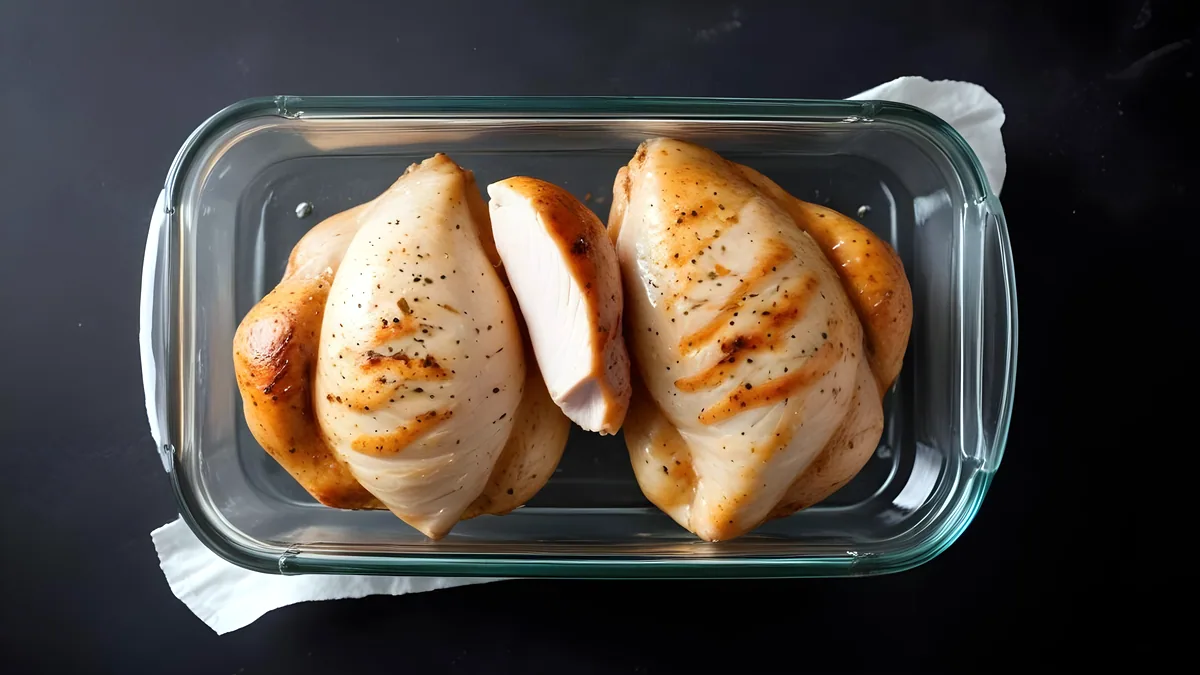
Chicken breast in the oven is cooked at 190 C (375 F) for 20 to 25 minutes, depending on thickness, and the breast is done when a probe reads 74 C (165 F) at the thickest point. This is a dry-heat, single-tray method that suits a whole roast, a batch of 4 to 6 breasts for meal prep, or a breast paired with vegetables in one pan, and it is the same principle whether the meat is a farmed supermarket breast or a game breast you have butchered at home. The two variables that decide the result are the oven temperature and the resting time after the bird comes out, and both are fixed numbers, not estimates.
The broader system that produces a game breast worth roasting, from butchery through seasoning, is covered under Cooking Species, Cuts and Preparation. If the roast is going to sit on a plate of grains, the rice side has its own set of times and ratios, worked through in Rice: Stovetop and Rice Cooker. A spring pan of spears roasted on the rack above the chicken is the natural side, and the timing is spelled out in Cooking Asparagus. For the full chain from a wild bird to a plated dish, the overview is From field to fork.
Why the oven beats the pan for chicken breast
The oven cooks chicken breast by surrounding it with 190 C (375 F) radiant and convection heat, so the breast browns on the outside while the interior climbs to 74 C (165 F) at a steady 0.5 to 1 C per minute. A frying pan does the same job faster, but it does it unevenly: the skin side runs 10 to 15 C hotter than the far side, and a 2 cm thick breast is easy to overcook by the time the centre reaches temperature. The oven removes that gradient. You set the heat, you watch the timer, and the breast comes out with a 3 to 5 mm golden crust on top and a pink-to-white interior that stays moist because the cooking rate is slower and more even. The trade-off is time: an oven roast takes 20 to 25 minutes versus 8 to 10 in a pan, but the margin for error is 3 to 4 times wider, and that margin is what matters when you are roasting 5 or 6 breasts at once for a week of meals.
Preheat, prepare, and the numbers that set the clock
To set the oven and prepare the chicken breast, follow 4 steps before the timer starts.
- Preheat the oven to 190 C (375 F) with a wire rack set on the middle shelf and a roasting tin of water on the shelf below, the steam keeping the breast from drying at the edges.
- Pat the breast dry with a paper towel until no surface water remains, then score 3 shallow lines across the skin at 2 cm intervals to even out the cooking depth.
- Season both faces with 1 teaspoon of salt and 0.5 teaspoon of black pepper per 200 g of meat, and rub 15 g of soft butter under the skin to carry the fat into the muscle as it roasts.
- Place the breast skin-side up on the rack and put the pan into the oven; the clock starts when the door closes, not when the oven reaches temperature.
The thickness of the breast is the single variable that moves the time. A breast that is 2 cm thick at the centre needs 20 minutes at 190 C (375 F). A breast that is 4 cm thick, common in a game bird, needs 25 to 27 minutes at the same heat. If you want to cut the time by 4 to 5 minutes, raise the oven to 200 C (400 F) and check the probe at the 18 minute mark instead of 22.
The 4 signs that the chicken breast is done
The 4 signs that the chicken breast is done at 74 C (165 F) are the probe reading, the clear juices, the internal colour, and the feel of the thickest spot.
- Probe temperature: a digital thermometer inserted into the thickest part of the breast, away from any bone, reads 74 C (165 F). This is the only sign you should trust; the others are secondary checks.
- Clear juices: pierce the breast with a skewer and watch the drip. Clear liquid means the proteins have set; any pink or red tint means the breast needs another 3 to 4 minutes in the oven.
- Internal colour: slice one breast lengthwise at the thickest point. The meat should be white to pale pink at the very centre, with no translucent or glossy strip running through the middle. A strip of pink that is 2 mm wide or less at 74 C on the probe is safe; a strip that is 5 mm wide means the reading was taken too close to the surface.
- Feel test: press the thickest part with the back of a spoon. A done breast gives slightly, like the fleshy pad under your thumb, not firm like a raw breast that pushes back hard.
Check the probe at the 18 minute mark for a standard 2 cm breast. If it reads 71 C (159 F), the breast will hit 74 C (165 F) in the 2 minutes of resting, so pull it from the oven immediately. If it reads 68 C (155 F), give it another 3 minutes and re-check. The probe should never be inserted into the bone, because bone conducts heat and gives a false-high reading by 2 to 4 C.
Rest, slice, and the 2 ways the breast loses moisture
The rest is where the chicken breast holds its moisture, and 2 things undo it if you skip the step or slice the meat wrong. Rest the breast for 5 to 8 minutes under a loose tent of foil, not wrapped tight, because a tight wrap steams the skin and turns the 3 to 5 mm crust you just built into a pale, wet layer. During the rest the internal temperature rises 2 to 4 C as the heat from the surface migrates inward, so a breast pulled at 72 C (162 F) finishes at 74 C (165 F) on the cutting board. Slice against the grain in 5 mm planks, not with the grain in 1 cm chunks, because the muscle fibres in a breast run lengthwise and a cross-grain cut shortens the fibres by 60 to 80 percent, which is the difference between a tender slice and a chewy one. The 2 ways the breast loses moisture are a skipped rest (the juices pool at the surface and run onto the board) and a too-hot oven (above 220 C (425 F) the surface proteins set before the interior is cooked, sealing in a dry centre).
Time and temperature by breast type
The time and temperature for a chicken breast shift with the source of the meat, and the table below covers the 4 types you are most likely to roast.
| Breast type | Typical thickness | Oven temperature | Roast time | Probe target |
|---|---|---|---|---|
| Farmed, bone-in, skin-on | 2 to 3 cm | 190 C (375 F) | 20 to 25 min | 74 C (165 F) |
| Farmed, boneless, skinless | 2 cm | 190 C (375 F) | 15 to 18 min | 74 C (165 F) |
| Game (partridge, quail) | 1.5 to 2 cm | 180 C (350 F) | 12 to 15 min | 71 C (160 F) for medium |
| Game (pheasant, partridge breast) | 2 to 3 cm | 180 C (350 F) | 18 to 22 min | 74 C (165 F) |
A game breast is leaner than a farmed breast, with 2 to 4 percent fat against 5 to 8 percent in a farm bird, so it carries less internal moisture and dries out 3 to 4 minutes sooner at the same heat. The 10 C (18 F) lower oven temperature for game is not a stylistic choice; it slows the surface set so the interior reaches 74 C (165 F) before the outside goes past 85 C (185 F), the point at which the muscle proteins in a lean breast squeeze out their last 1 to 2 percent of water. If you are roasting a pheasant breast that is 3 cm thick, set the oven to 180 C (350 F), start the probe check at 18 minutes, and expect the breast to come out at 21 to 22 minutes with a 2 to 3 minute rest.
Common mistakes and the 3 fixes
The 3 most common mistakes when cooking chicken breast in the oven are a cold breast, an uncalibrated probe, and a rest that is too short, and each one has a specific fix. A breast taken from the refrigerator and put straight into the oven has a core temperature of 4 C (40 F) and must climb 70 C (126 F) to reach the target, so the outside cooks 4 to 5 minutes before the centre even starts to warm. Rest the breast on the counter for 15 minutes before roasting to bring the core to 12 to 15 C (55 to 59 F) and cut the total time by 3 to 4 minutes. An uncalibrated probe that reads 2 to 3 C high will tell you the breast is done at 71 C (159 F) when it is actually 68 C (155 F), and the breast will be pink at the centre. Boil water in a pot, insert the probe into the water, and confirm it reads 100 C (212 F); if it reads 97 C (207 F), subtract 3 C from every reading for the rest of the session. A rest that is 2 minutes instead of 5 minutes loses 1 to 2 percent of the breast's total moisture to the cutting board, which is the difference between a slice that is juicy and one that is dry on the first bite. Set a 5 minute timer the moment the breast comes out of the oven and do not slice until it rings.