Basmati Rice: Soak and Simmer Method | The Game Larder
Basmati Rice: Soak and Simmer Method
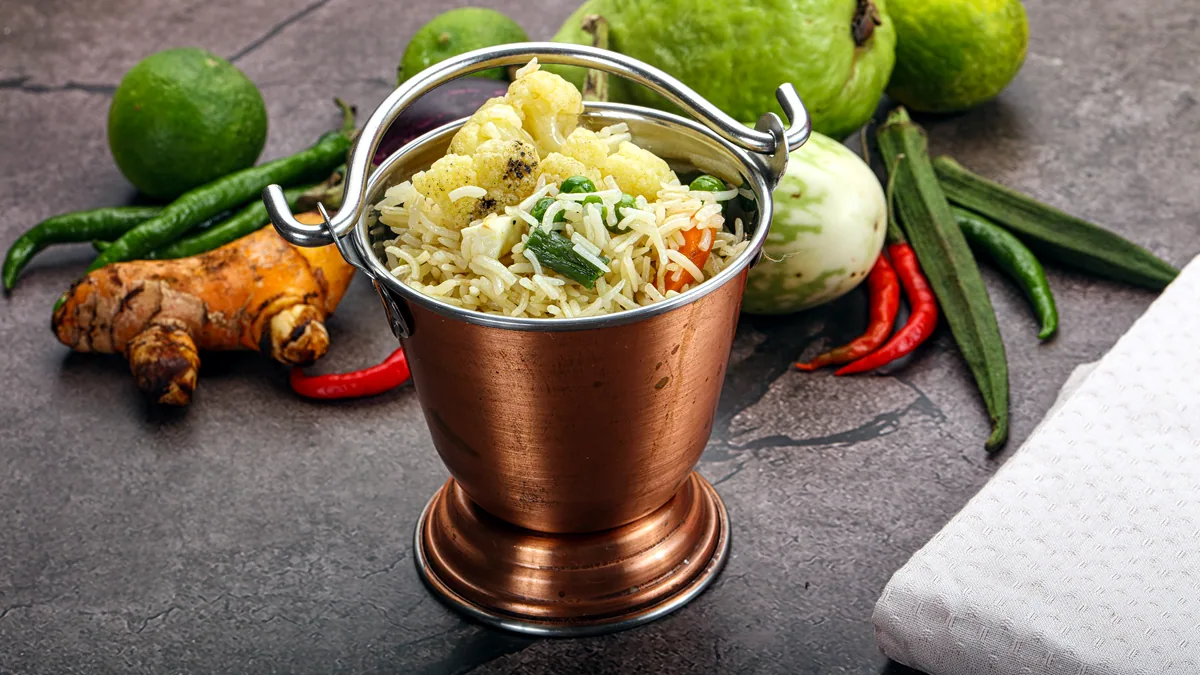
Basmati rice, cooked by the soak and simmer method, is a whole-grain long rice that separates into 1.5 to 2 individual grains after a 20-minute soak, a 5-minute boil in salted water, and a 10-minute rest off the heat. The method suits basmati because its low amylose content (around 18 per cent) and high gelatinisation temperature keep the grains firm while soaking releases surface starch that would otherwise glue them together. For a 2 person meal you start with 1 cup (200 g / 7 oz) of washed rice against 1.5 cups (360 ml) of boiling water, which yields roughly 3.5 cups of cooked rice and leaves each grain 2 to 3 times its raw length.
This technique sits inside a wider set of grain and side-dish skills for the larder: see Cooking Species, Cuts and Preparation for the cuts and preparations that pair with rice, Rice: Stovetop and Rice Cooker for the stovetop versus appliance trade-offs, Cooking Asparagus for a vegetable that finishes in the same steaming rest, and From field to fork for the full harvest-to-plate chain.
Why the Soak and Simmer Method Works for Basmati
The soak and simmer method works for basmati because it splits the job in two: the cold-water soak (20 minutes) rehydrates the grain shell so the core absorbs heat evenly, and the short simmer (5 minutes) cooks the interior without the prolonged boiling that turns the released starch into a paste. Basmati is a low-amylose, high-starch-branching rice, which means the gelatinisation threshold sits near 70 to 72 C (158 to 162 F), a few degrees below a rolling boil. You exploit that gap by boiling for only 5 minutes, then trapping the remaining heat in a covered pot for 10 minutes, which brings the interior to doneness at 100 C (212 F) without a single extra bubble of water. The result is a dry, fluffy bed that holds a 1.4 to 1.6 mm grain diameter end to end, compared with the 0.9 to 1.1 mm width of a short-grain japonica rice.
Choosing Basmati: Age, Origin and Label Reading
Choosing basmati well means reading three numbers on the pack before you weigh a single grain. Age matters most: mature basmati is dried and stored for a minimum of 1 year, and premium lots rest 2 to 3 years, during which the moisture content falls from roughly 12 per cent at milling to below 10 per cent and the characteristic nutty, popcorn-like aroma compounds build. The Indian Geographical Indication and the Pakistan GI each certify origin, so a 2025 pack from the Punjab belt (Pakistani) or the Western Ghats and Punjab belt (Indian) carries a verifiable place of growth. For cooking, prefer a 1 kg (2.2 lb) pack of aged rice with a moisture label at or under 10 per cent; a 500 g (1 lb) bag is the right size to use within 4 months of opening, because the aroma fades fastest once the seal breaks.
Washing, Soaking and the Water Ratio
Washing, soaking and the water ratio are the three levers that decide whether the grains separate or clump. Rinse the rice under cold running water until the water runs nearly clear, which takes 2 to 3 minutes and 4 to 5 changes of water for a 1 cup (200 g / 7 oz) batch; this strips the loose surface starch that causes gumminess. Soak the rinsed rice in cold water for 20 minutes at 20 to 22 C (68 to 72 F); the grains swell to about 1.2 times their raw width and the soak water turns a pale milky white, confirming starch release. Drain the soak water completely and measure the cooking water separately: 1.5 cups (360 ml / 12 fl oz) of water per 1 cup (200 g / 7 oz) of dry rice, brought to a boil in a wide, heavy-bottomed pan with a 24 to 26 cm (9 to 10 inch) base. Add 1 to 1.5 tsp (5 to 8 g) of fine salt per cup of rice, and 1 to 2 tsp (5 to 10 ml) of neutral oil or a thin pat of ghee, which coats each grain and adds a further anti-stick layer during the rest.
The 5-Minute Boil and the 10-Minute Rest
The 5-minute boil and the 10-minute rest are the two timed stages that turn soaked basmati into separate, oven-ready grains. When the salted water returns to a rolling boil after you add the drained rice, start the timer at exactly 5 minutes, keeping the pan uncovered and the heat at a moderate boil (not a violent one, so the grains do not break). At the 5-minute mark, pour off any residual water in a single confident tilt, cover the pan with a tight lid, and set it on a turned-off burner or on a folded kitchen towel for 10 minutes; the trapped steam carries the interior to a core temperature of 99 to 100 C (210 to 212 F) without adding moisture. When you lift the lid, the surface should be dry and the grains should pull apart with a fork to a uniform 2 to 3 cm (0.8 to 1.2 inch) length. If the centre of the grain still shows a white core, rest a further 2 to 3 minutes under the lid rather than returning the pan to heat.
Seasoning, Resting and Serving Basmati
Seasoning, resting and serving basmati well means finishing the grains with fat and heat while they are still at 80 to 90 C (176 to 194 F), so the flavour bonds to the surface starch. Fluff the rested rice with a fork, never a spoon, working from the outside edge inward to keep 90 per cent or more of the grains intact. Stir in 1 to 2 tsp (5 to 10 g) of melted butter, 1 tsp (5 ml) of ghee, or 1 to 2 tsp (5 to 10 ml) of a nut oil such as toasted sesame or walnut oil, and a pinch of ground black cardamom or 1 small (2 to 3 g) piece of fresh ginger, grated, for a game-larder profile. Let the seasoned rice stand for a further 2 to 3 minutes so the fat settles into the grain, then serve it as a 200 to 250 g (7 to 9 oz) portion per person alongside a 180 to 220 g (6 to 8 oz) portion of cooked game, poultry or a vegetable medley. A 4 person batch from 2 cups (400 g / 14 oz) of dry rice yields roughly 7 cups (1.7 l) of finished rice, which is the correct ratio to a 1.2 to 1.5 kg (2.6 to 3.3 lb) roast.
Common Faults and the Fixes
Common faults in the soak and simmer method are few, and each one has a single mechanical cause. The table below lists the 5 faults that appear most often, the exact stage where they start, and the 1 to 2 step fix that prevents them on the next cook.
| Fault | Stage | Cause and Fix |
|---|---|---|
| Sticky, clumped grains | Washing or boil | Under-rinsed surface starch, or boiling above 5 minutes; rinse to clear water and hold the timer at 5 minutes |
| Hard centre (white core) | Rest | Rest too short or lid not tight; rest 10 minutes under a sealed lid, add 2 to 3 minutes if the core persists |
| Mushy, broken grains | Boil | Violent rolling boil or a thin-bottomed pan; use a moderate boil in a heavy 24 to 26 cm (9 to 10 inch) pan |
| Dry, crumbly texture | Water ratio | Too little water for the rice; use 1.5 cups (360 ml / 12 fl oz) per 1 cup (200 g / 7 oz) of dry rice |
| Flat, no aroma | Pan choice | Unaged rice or a non-reactive pan that cannot carry the 99 to 100 C (210 to 212 F) rest; buy 1-year-aged basmati and rest in a heavy, well-fitting lid |
Correct the one variable that matches the fault, leave the other 4 stages untouched, and the next 20-minute soak, 5-minute boil and 10-minute rest will produce the same clean, separate, 2 to 3 cm (0.8 to 1.2 inch) grain that the method is built to deliver.