What a Catering Assistant Does and Earns | The Game Larder
What a Catering Assistant Does and Earns
A catering assistant is a front-of-kitchen food service worker who prepares, plates and serves food under a chef or supervisor, a role that spans the full shift cycle from 6.30 a.m. prep to a 10 p.m. close-out in most working restaurants and catering venues. The job sits one step below the chef on the kitchen ladder and one step above a barback or porter, and it is the entry point for the large majority of people who end up running a kitchen in the United Kingdom. This page defines the role, walks through a standard day, lists the duties by time of day, covers pay and hours, and maps the realistic routes into catering assistant jobs, including how to find catering assistant jobs near you.
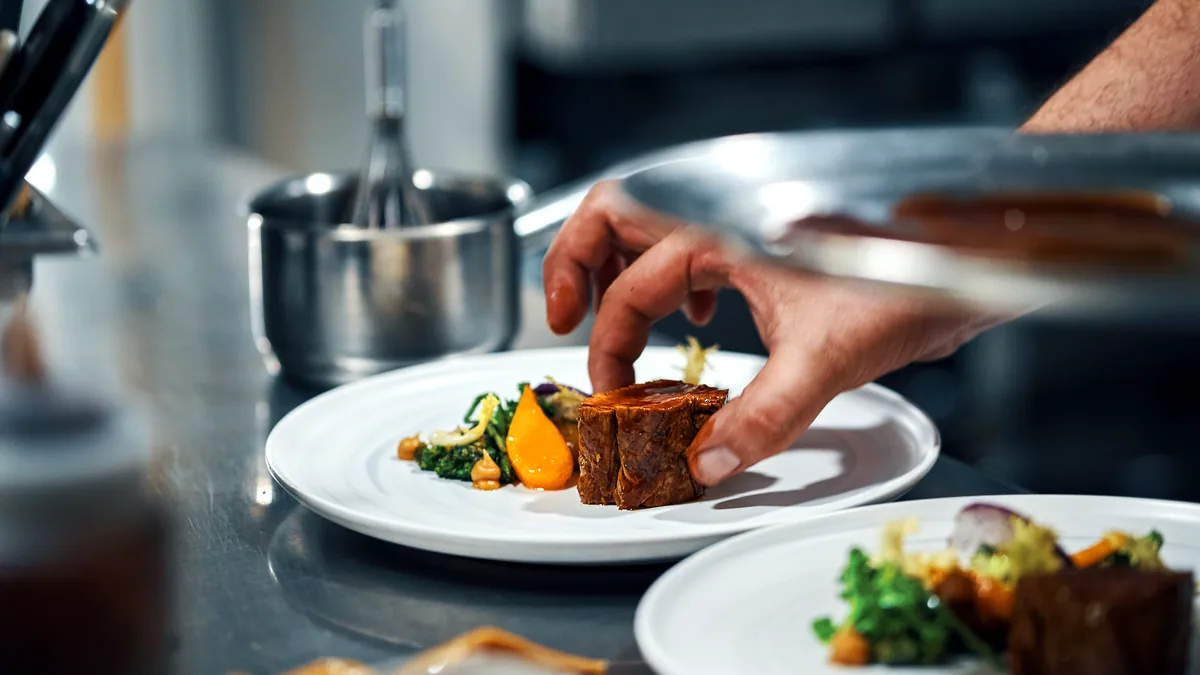
The work sits in the same hands-on tradition as home cooking at scale, the sort of practical method covered in a <Cooking Game for Home> style guide, and it depends on knowing which kit does what job, a difference detailed in <Catering Equipment: Hire, Buy and Rent Explained>. Many specialist operators, including small game butcheries and country kitchens that run <Catering built on wild game>, hire assistants for seasonal menu blocks rather than a fixed year, which is why the role appears in both permanent listings and short-term contracts.
What a catering assistant does in a day
A catering assistant spends the shift moving through the kitchen in three fixed phases, and each phase has its own checklist. The pattern holds whether the venue is a 90-seat restaurant, a hotel banqueting suite or a college canteen, and a new assistant learns to read the day by the phase rather than by the clock.
Opening: 6.30 to 9.00 a.m.
The opening phase is about readiness. The assistant strips and washes vegetables, portion meat, checks deliveries against the order sheet, labels and dates everything that goes into the chillers at 2 degrees Celsius or below, and confirms that the pass, the plate rail and the till are all set for the first service.
Service: 11.30 to 2.30 and 6.00 to 10.00 p.m.
During service the assistant becomes the chef's hands. They plate finished dishes, run orders between the kitchen and the dining room, keep the bain marie topped up, reset the pass between courses and answer the floor's calls for specials. In a busy restaurant an assistant might plate 120 covers across both sittings, and the whole phase runs on a strict two-minute rule: no plate leaves the pass after 2 minutes without a reset.
Closing: 10.00 p.m. onwards
The closing phase returns the kitchen to the 6.30 standard. The assistant takes down the grill, breaks down the fryer basket, runs the dishwashers, logs stock against the waste sheet and walks the floor with a checklist so the next opening starts clean.
The duties by time of day
The duties of a catering assistant break down by time of day in a way that is easier to learn as a table than as a list, because the same hands perform all of it within one shift. The table below is the standard split used in most hospitality job descriptions across the UK.
| Time of day | Core duties | Typical output |
|---|---|---|
| 6.30 to 9.00 a.m. (opening) | Vegetable prep, portioning, delivery checks, chiller labelling at 2 degrees Celsius, pass and till setup | Full mise en place for lunch service |
| 11.30 to 2.30 p.m. (lunch) | Plating, order running, bain marie management, specials calls, pass resets every 2 minutes | Up to 120 covers plated in one sitting |
| 4.00 to 6.00 p.m. (turnover) | Mid-shift stock, waste log, second mise for dinner, equipment checks | Dinner mise complete before 6 p.m. |
| 6.00 to 10.00 p.m. (dinner) | Plating, order running, floor liaison, specials, pass resets | Second service plated to standard |
| 10.00 p.m. to 11.30 p.m. (closing) | Grill teardown, fryer breakdown, dishwasher cycles, waste log, floor checklist | Kitchen returned to the 6.30 opening standard |
Because the table is the standard split, an assistant who can work all 4 phases in a single shift is considered a full-day assistant and commands a higher hourly rate than one who only covers opening or closing.
What a catering assistant earns
A catering assistant earns between 9.50 and 13.00 pounds per hour in most 2025 UK listings, with the lower figure applied to entry-level posts in the north and the higher applied to London, hotel banqueting and private chef teams. The 12 hour shift is the norm, which means a full-time assistant on a 9.75 pound rate takes home roughly 490 pounds before tax across 5 shifts a week. The pay sits above the 12.21 pound national living wage threshold for under-21s but below the chef de partie band, which starts around 14.50 pounds in the same market. Tip share is separate and varies by venue; a 10 percent pool split across the kitchen and floor team is the common arrangement in mid-range restaurants.
Catering assistant jobs and how to find them near you
Catering assistant jobs appear in four main channels, and the best results come from checking all 4 within a 7 day window rather than waiting on a single posting. The channels, in the order an applicant should use them, are:
- Job boards such as Caterer.com, Hospitality Recruiter and Indeed, filtered by the catering assistant title and a 10 mile radius to find jobs near you
- Direct enquiries to restaurants and hotels within that same 10 mile radius, because many kitchens post 50 percent of their intake by hand on the door rather than online
- Agency catering desks, which place assistants into contracts of 6 to 12 weeks and often pay a 20 percent premium over the direct rate for that period
- College hospitality courses, which place students into a 24 week placement block and treat the placement as paid work at the assistant rate
To search for catering assistant jobs near you, set the board radius to 10 miles, apply to at least 3 postings a day for 2 weeks, and follow up with a phone call on day 5 if there is no reply. That 15 application and 3 call cycle is the pattern that gets an assistant into a first interview within a month in most UK labour markets. The assistant should keep a one-page CV that lists 3 recent venues, the hours worked at each, and the 4 phases of the day they can cover, because the recruiter uses that list to match the applicant to the opening shift.
Routes into the role and how it grows
The routes into a catering assistant post are short and practical, and the role grows upward in a fixed order. Most assistants start with no formal qualification, a food hygiene level 2 certificate and a 2 week trial shift at the opening rate of 9.50 pounds. After 3 months on the floor the assistant is assessed for a chef de partie track, which adds a level 3 qualification and lifts the rate to the 14.50 pound band. A minority move laterally into catering management, where the assistant's full knowledge of the 4 phases of the day becomes the basis for a shift manager role. The route is linear, the steps are dated, and the assistant who completes the 3 month trial and the level 3 course in year 2 is on a clear path to a chef de partie post by year 3.
The assistant is the first worker a kitchen tests for reliability, and the role is the one that keeps the whole service cycle moving from the 6.30 a.m. prep to the 11.30 p.m. close. Every phase in the table above is a step the assistant owns, and the 9.50 to 13.00 pound range is the standard starting band that every UK kitchen uses to hire one.