Blank Recipe Books for Your Own Wild Game | The Game Larder
Blank Recipe Books for Your Own Wild Game
A blank recipe book is a bound or assembled collection of empty pages designed to be filled in by hand, and a blank recipe book for your own wild game holds 24 to 96 recipe slots, each sized for a single dish you have shot, dressed and cooked yourself. Because the product is unfinished, the buyer is the author: the cover, the layout and the ink all belong to you. A good wild game edition does three things a plain notebook does not, and it does them on purpose. It prints a game-specific ingredient line (species, cut, field-to-pan time), a venison, pheasant or rabbit weight field, and a curing or cooking column, so the blank page already thinks like a hunter's kitchen rather than a biscuit tin. The rest of this page is about which blank formats fit a wild game kitchen, where to get one, and how to keep the record accurate from the first pheasant to the 50th.
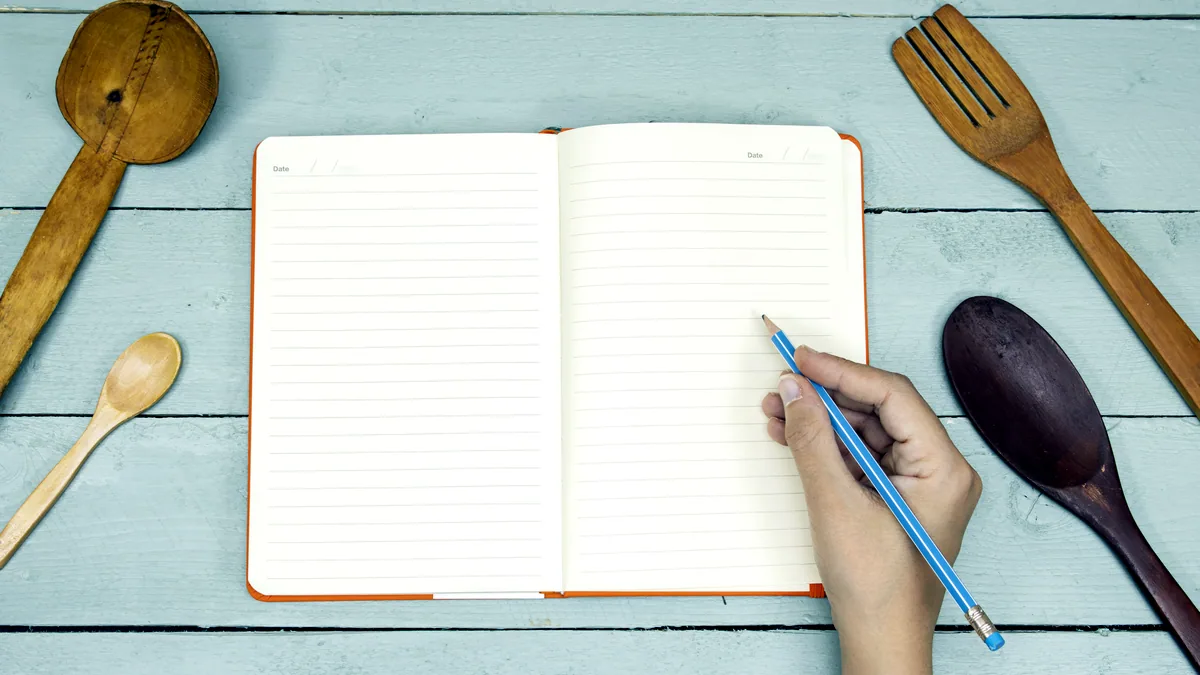
The central question is whether the book you choose is a blank recipe book for wild game or a generic blank you will have to bend. A blank recipe book for wild game is sold as an empty template shaped around game: it opens on a cover, then repeats 32 to 72 two-page recipe cards, each with the headings you would otherwise have to draw in. A generic blank book gives you the same page count with none of those headings, so you spend the first month formatting. Both are blank, both are finished products you write in, and the difference is only in the pre-printed structure. If you already know your favourite 20 dishes, a generic A4 blank is cheaper; if you want the book to teach you what to record, buy the game-shaped one.
Blank recipe books for wild game: what is actually in the box
A blank recipe book for wild game is a physical object, and the object is where the value lives. Most come in one of 3 sizes, and each size suits a different kitchen.
- A5 compact, about 14.8 by 21 cm, holds 24 to 48 recipes and sits in a drawer; it is the format to keep at the larder counter.
- A4 standard, 21 by 29.7 cm, holds 48 to 96 recipes and leaves room for a hand-drawn cut diagram on the facing page.
- Leather or cloth-covered hardback, 200 to 400 pages, holds 100+ recipes and is built to be inherited, not archived.
Beyond size, the book earns the wild game name only if it pre-prints the fields a game recipe needs: species, cut, weight, field-to-pan time, cure or cook method, and a yield line. A plain ruled book leaves those blank in the literal sense, and you end up redrawing the same table on every page. The pre-printed fields are the feature that separates a blank recipe book for wild game from a notebook with a game label stuck on it.
How many recipes should the book hold
Match the slot count to how much game you actually cook per year. A household that processes 12 to 18 animals a year, split across venison, rabbit and gamebird, fills 24 to 40 recipes in the first 2 years, so a 48-slot book is the safe middle. A household that runs a small shoot day or does weekly venison will pass 60 slots within 3 years and should start at 96. The rule is to buy one size up from your current count, because the blank pages at the back are where the new species land.
Where to buy a blank recipe book near you
A blank recipe book is a physical product, so the fastest route is the one closest to your door, and the nearest option decides what you get this week. In the UK, the near-me search splits into three real tiers, and the gap between them is mostly price and structure, not blankness.
| Channel | Typical format | Price | Best for |
|---|---|---|---|
| Local stationery shop | Blank A4 or A5, no headings | 3 to 12 pounds | Buying today, filling in your own game fields |
| Supermarket chain such as Kmart | Blank book, 96 to 200 pages | 5 to 15 pounds | High volume of blank pages, no game layout |
| Online game or craft supplier | Game-shaped template, 48 to 96 slots | 15 to 40 pounds | Pre-printed wild game fields |
| Print-on-demand, self-bound | Any size, any heading | 20 to 60 pounds | A book built to your own 50 recipes |
The Kmart shelf is the near-me answer for most UK and New Zealand kitchens: a chain that stocks a 96 or 200 page blank book in the stationery aisle, at a price that makes it disposable. It is blank in the fullest sense and it is the one you grab when you need a book now and the game-shaped one is a 2 week online order. For New Zealand buyers, the near-me tier is the same logic with a different name: the local bookshop and the big retail chain both carry a blank 48 to 96 page book, and the game-shaped template is usually an online or print-on-demand order. The distance from your door, not the brand, is what sets the price and the structure.
How to choose between the blank options
To choose between the blank options, decide three things in this order: the pre-printed structure, the binding, and the paper. The structure is what makes it a game book at all. The binding decides whether it lies flat while your hands are wet. The paper decides whether the ink or the grease survives the larder.
- Structure: buy the pre-printed wild game fields if you are building the habit, and buy a plain blank if you already have a fixed format.
- Binding: lay-flat or coil binding for a working kitchen, hardback for a book you want to keep and show.
- Paper: 90 to 120 gsm for ink that does not bleed, and a smooth or lightly textured finish for a grease-proof page.
A book with the right structure but a cheap glued binding will warp open in a damp larder within a year, and a beautiful hardback with thin paper will turn to pulp at the first venison braise. Weight the structure highest, because you can rebind a book, but you cannot re-print the headings you are missing on every page.
Setting up the blank book for your own game
To set the blank book up for your own game, write the first 6 pages before the first recipe, because those pages are the index the rest of the book hangs on.
- Species list: name every species you process, such as venison, pheasant, rabbit and partridge, with the year you first recorded it.
- Cut key: define the 8 to 12 cuts you actually use, so a later page can say "loin" once instead of re-describing it 20 times.
- Weight and yield table: record the dressed weight and the usable yield for each species, so every recipe can quote a real starting weight.
- Method index: list the 5 to 8 preparation methods you repeat, such as cure, smoke, braise and roast, so the method line on each recipe is a single word.
Those 6 pages turn a blank book into a working record, and they are the part a game-shaped template gives you for free. If you bought a plain blank, the 6 pages are your first job, and they are also the reason the book becomes yours rather than a generic notebook with a game cover.
Keeping the blank book accurate and useful over time
To keep the blank book accurate over time, treat it as a living log and not a gallery, and add the numbers that a memory loses. The single most useful line on any recipe is the one that is hard to guess and easy to forget: the field-to-pan time, the cure weight, and the oven temperature that actually worked, not the one the cookbook suggested. Record the date and the batch, so a venison recipe from a 2024 shoot and the same venison recipe from 2026 are two entries, not one. When a dish is a keeper, mark it with a symbol in the margin so the 50th recipe is one glance away from the 3 you cook every winter. A blank recipe book is only as good as the last number written in it, and the numbers are the thing no pre-printed template can supply for you.
The book is the frame, but the recipes you write into it are the content a family or a team will actually use, and the frame only matters if it fits the content. A blank recipe book for wild game gives you the pre-printed structure, the size and the paper, and it is the cheapest way to build a record that outlives any single season. The nearest shop decides what you hold in your hand this week, the structure decides whether it is a game book or a notebook, and the numbers you write in decide whether it is worth keeping. For anyone who feeds a household or a table from their own shoot, the blank book is the tool that turns a handful of remembered dishes into a 24 to 96 page reference, and it is the tool that a Recipe Book Stands and Holders for the Kitchen display is built to keep open on the counter. The next step is to match the blank book to the reading and reference material you already own, which is the job of The Best Cookbooks and Recipe Books for Game as a companion shelf, and to plan how the finished dishes leave the kitchen, which is the territory of Catering built on wild game for the days the book feeds more than one family.